
Home - Teammates - Great River Course/ Team Schedule - Equipment - Photo Gallery - National Great River
TEAM UPDATE: August 6, 2008
"OUTDRIVE, OUTCHEER, OUTRUN - GO NUTS!"
 GOING THE DISTANCE:
TIPS TO CONSIDER
GOING THE DISTANCE:
TIPS TO CONSIDER
Today, let me share with you two integral teammates of any long-distance run or relay race. They are Blisters and Chafing. It's inevitable that if you're going to shove your feet into some shoes and your body into some shorts, and then run several miles - there will be blistering and chafing. But don't let this worry you - the GRR (Great River Relay) is a manageable feat for the majority of runners, if they take the right precautions. Having said that, let's start with blisters.
BLISTERS
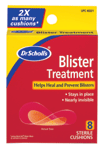
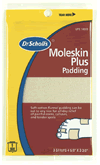
Just a quick reminder, DO NOT attempt to try out those new running shoes of yours at the GRR. That is almost a certain recipe for blisters. Remember what I suggested in a previous update regarding shoes and then top off those shoes with some preventive measures, such as Dr. Scholl's Blister Treatment and Moleskin Plus Padding (see below).
As you are out running in the next few weeks, after removing your shoes, check those spots on your feet (i.e. heel, ball, instep, etc.) that look red and irritated. For those short distance, these areas may not have time to blister, but out on the GRR, blistering may be so subtle, you may not notice... until it's too late. Be aware of these areas of your foot and "pad" them with these type of bandages BEFORE your leg assignments - it's preventive and smart.
Captain Liz Harper is a veteran to the Great River Relay experience, so she won't mind if I talk candidly for a moment about NIPPLES. Yes, gentlemen, I love them just as much as the next guy, but not when they're bleeding.
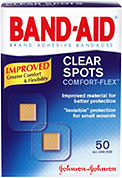
Regardless of the type of shirt fabric you wear, after so many miles of running and rubbing (even while standing on the side of a van and cheering), you will eventually experience severe chafing and, if left untreated, possible bleeding. But don't worry, even if your nipples bleed, they'll heal in the following weeks. But why let the situation get to that? Take a moment in these next weeks to pick up a box (see below) of Band-Aid Clear Spots. They're large enough to cover the largest of nipples and small enough not so as to not have to cause severe pain when pulling them and chest hair (at least for the men) along with them.
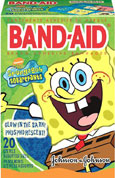
For your personal preventive needs, I would suggest putting together a small ziploc bag of a few assorted Band-Aids, for those accidental boo-boos that may occur along our journey. For me, depending on my mood, I prefer the SpongeBob or Batman variety of Band-Aids (see below). Others, like Bill Reinfeld and Kari Morrissey, favor the Care Bears variety. And still others, like Daren Carlson and Bill Reinarts, go the patriotic route. You decide - pick the brand that motivates you and keeps those owwies safe.
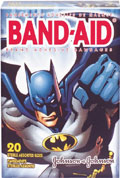
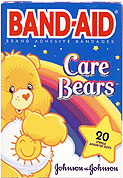
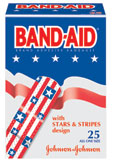
Now, it's time to cover the area of chafing.
CHAFING
It's a simple fact: Where there's friction, there's chafing. All right, minds out of the gutter, teammates - I'm speaking specifically on your feet, chest and inner thighs. Again, think preventive.
The two items I've used with a lot of success are Body Glide and Chamois Butter (see images below). Chamois Butter is a little messier, while Body Glide is much like a roll-on anti-perspirant. In the past year, teammates Liz Harper and Bill Reinfeld introduced me to Sport Shield (another roll-on) - and it works AWESOME! I would suggest you consider picking up a stick of Body Glide or Sport Shield, as it is this one item that teammates don't tend to like to share. It must have something to do with using it on one's inner thighs.
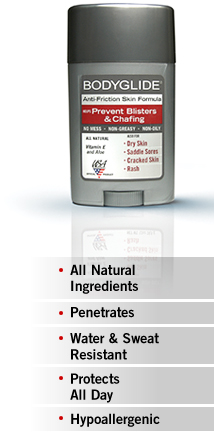

If you have any questions with the above items, let me know. Sorry to be so direct and candid about our body parts, but you will soon realize that there is very little that is sacred on the Great River Relay.
If you are not familiar with BioFreeze before the Great River Relay, you will be. I had heard about in several running circles but never thought to try it. And then I found myself running the Goofy Race-and-a-Half Challenge at Disneyworld in January 2007. The goal of the challenge is to run the Disneyworld Half Marathon on Saturday and THEN run the Disneyworld Marathon on Sunday.

It was in the Disneyworld Marathon where I was offered BioFreeze at one of the aid stations. I lathered it on my knee and thighs, just to try it, and it was AWESOME. I will be bringing a large container of it and you are welcomed to use it on your runs. For those wondering, BIOFREEZE products (as the website states) "contain ILEX, an herbal extract from a South American holly shrub. ILEX is used around the world in various health & wellness formulations. BIOFREEZE topical analgesic does not use waxes, oils, aloe or petroleum. The result is a fast-acting, penetrating, long lasting pain reliever."
Finally, I share with you an article that was written by John Bingham, known in the running community as "The Penguin." In this article, he shares his perspectives when he participated in the 200-mile team relay, Hood to Coast Relay. I think his comments are a wonderful observation of any long-distance team relay and will hopefully give you a little burst of motivation.
Penguin
Chronicles: One very long day
By John Bingham
October 18, 2006
When a friend suggested running the Hood to Coast relay, a 200 mile team race from the summit of Mount Hood to the Oregon coast, I was less than enthusiastic. I'd heard very good things about the event, but wasn't convinced that I had the nerve or the patience to run three times over 24 hours while riding in a closed vehicle in between. I couldn't imagine the dynamics of six sleep-deprived runners trapped together in a van for 36 hours.
I wasn't enthusiastic as I boarded the plane for Portland. I wasn't enthusiastic as we sat around eating dinner devising our race strategy or loading the van with enough food to feed an infantry regiment. And I definitely wasn't enthusiastic as we all gathered in a cabin the night before the race.
Most of the team members were veterans of the Runner's World Alaska cruise. Thinking back, it seems to me that the idea of doing the race came after a night that included more than a few adult beverages. It's funny how an idea that sounds great a year in the future suddenly turns into what you're doing tomorrow morning. I'm happy to report that all my misgivings were for nothing. The team, the race -- the entire experience was fantastic.
Team captain, Cindy, assigned the rotation. For reasons that are unclear to me, even after asking her nearly non-stop for 48 hours, I was runner number two, legs 2, 8 and 14, the second most cumulative miles of all the rotations. Leg two begins with a six mile downhill run that drops 1,500 feet. While it's not as tough as leg one, it's enough to make you wish you could exchange your quads for fresh ones. Leg eight is on part of the Portland marathon course, and I still have no idea where leg 14 was.
The good news about being early in the rotation is that you finish your segment early. That's also the bad news. You spend most of your time trying to get ready for your next leg. That, and trying to eat, sleep and cheer for your teammates.
The 1,000 teams in the race start in waves of 50, every 15 minutes, for over 12 hours. Teams predicting the slowest times start first. This meant that we started being passed within the first hour and continued to get passed for the next 32 hours. There wasn't one leg where we weren't passed. A weaker team would have gotten discouraged.
But not us. With every mile, with every leg, we got stronger. With every hour, we got closer to the finish and closer to each other. We learned what made each other laugh, what irritated us, what we liked to eat and how our bodies functioned. We also learned that despite differences in gender and age and more, we were all struggling to find something in our running that we couldn't find anywhere else in our lives.
The hours and miles wore away our masks. We dropped our disguises and our inhibitions. Whatever it was that separated us at the beginning now bound us together. We learned that the only people we could truly count on, and the only ones that truly mattered, were the one running and the ones sitting in the van. We became our own world.
Because we were in the first van, our race was over nearly five hours before the actual finish. As we sat at the beach watching team after team finish, I fell asleep. This provided my teammates with the opportunity to put a "will run for food" sign behind me to the delight of nearly everyone who passed by.
When we spotted our final runner we rushed to join her as she crossed the finish line. It was a moment unexpectedly absent of much enthusiasm. Rather than the sort of crushing emotions that I've experienced at the end of other long events, this was marked by an almost silent acceptance that no one of us had held the key to finishing. Each of us was required only to do our part.
As is so often the case, a life lesson came to me a day or so later. I hadn't tried to do more than my part. I hadn't tried to take control or even responsibility for anyone else's runs. I was there to do my part. And doing my part was all that I needed to do. It's all any of us ever needs to do.
If I was tired, I still had to run. If someone else was tired, I couldn't run for them. I had to take care of myself in order to take care of the team. The most selfish act would have been to focus on everyone else and forget about myself.
Giving too much became an act of betrayal. We each had to find that point of balance between taking care of ourselves and watching out for each other. We had to share our resources without depleting our own reserves.
It is a balancing act that many of us are not very good at. We are often fooled into thinking that caring for others is more important than caring for ourselves. We deceive ourselves into believing that if we give away what we truly need, that someone else will provide it for us. It isn't true.
Once again, running has been my greatest teacher. I've learned that I am only ever responsible to be me. I cannot run, think, feel or chose for anyone else. I need only to live my life well and let others be free to do the same. We live our lives alone with others, and with others, but alone. And in the end, life is a victory that we share.
Waddle on, friends.
John "The Penguin" Bingham has become one of the running community's most popular and recognized personalities. Through his books and columns Bingham has inspired a generation of new runners to find joy in walking, running and racing. Once an overweight couch potato, he looked mid-life in the face -- and got moving. Since then, he's participated in over 25 marathons and hundreds of 5K and 10K races.
Home - Teammates - Great River Course/ Team Schedule - Equipment - Photo Gallery - National Great River
Designed by Lee Hoedl, Copyright 2008, hoedl's haven, leehoedl@yahoo.com